
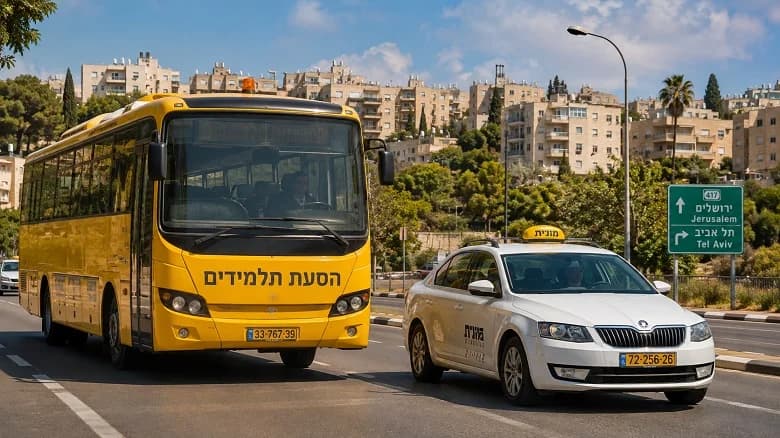
Opening a transportation business requires complete mastery of regulatory requirements, obtaining appropriate licenses, and implementing strict safety procedures. This is an industry with stable demand and a diverse market, but its practical management is significantly more complex than how it is perceived from the outside. Lack of knowledge at the outset can later harm the operational capacity of the business.
Types of Activities and Regulatory Implications
Private transportation - requires an appropriate vehicle and a driver with a professional license, with requirements varying according to the type of vehicle and group size. Student transportation - requires compliance with strict safety regulations and regular monitoring of vehicle condition and driver training. Employee transportation - requires route coordination and adherence to defined pickup times.
Each activity affects the type of license and accompanying supervision requirements. Aligning the activity with the regulatory framework is a basic condition for proper operation of the business.
Driver Licensing
The foundation for operating a transportation business is driver licensing. Every driver transporting passengers for compensation must hold an appropriate public driving license. This license is issued by the Licensing Authority after completing specialized training that includes safety studies, public vehicle operation, and compliance with regulatory requirements. The driver must meet age and driving experience requirements, pass theoretical and practical exams, and demonstrate full competence to perform the job.
The process of obtaining a public license also includes periodic medical examinations at an authorized institute, intended to verify that the driver is physically and mentally fit to drive a public vehicle. In cases of transporting students or vulnerable populations, police clearance certifying the absence of a criminal record is also required.
Vehicle Licensing
Every vehicle used to transport passengers for compensation must have a license for operating a public vehicle, issued by the Licensing Authority. This license is granted only after the vehicle meets defined safety standards, which include installation of mandatory equipment such as fire extinguishers, emergency hammers, public address systems, and standard lighting. Additionally, the vehicle must undergo fitness inspections at a higher frequency than a private vehicle, in accordance with the Ministry of Transportation requirements.
In cases where the business operates a fixed transportation line, an additional license for operating the line is required. This license is issued by the Ministry of Transportation after submitting a detailed route that includes pickup points, drop-off points, and travel times.
Licensing for Student Transportation
Student transportation requires a special license from the Ministry of Transportation in cooperation with the Ministry of Education. A vehicle intended for student transportation must meet strict standards that include installation of recording cameras, safety belts for every seat, and special signage identifying the vehicle as a student transportation vehicle.
Drivers must undergo additional training beyond the public license, which includes learning special procedures for safe pickup and drop-off.
Business Licensing from the Local Authority
Operating a transportation business requires obtaining a business license, in accordance with the Business Licensing Law. The license is granted after receiving approvals from various supervisory bodies, including fire department, planning and construction, police, and sometimes the Ministry of Health.
The licensing process includes presenting ownership or lease documents, a safety plan, and compliance with noise and air pollution regulations. Without a valid business license, the company cannot operate legally.
Registration as a Transportation Operator with the Ministry of Transportation
Every transportation business must register as a transportation operator with the Ministry of Transportation. This registration includes presenting the vehicle fleet, drivers, and the company's operational capacity.
Operator registration enables the Ministry of Transportation to supervise the company's activities and verify that it meets the required industry standards.
Essential Insurance for Transportation Businesses
Mandatory insurance and third-party insurance form the basis for safe operations and enable dealing with unforeseen events. Passenger insurance is required for all paid transportation activities and provides protection against claims in case of injury or accident during travel.
Special activities, such as student transportation or employee transportation on fixed routes, sometimes require dedicated coverage according to the type of service.
Pricing, Cash Flow, and Financial Management
Pricing transportation services requires a complete understanding of all cost components, from fuel and maintenance to insurance and driver salaries. Organized financial management helps the business cope with demand fluctuations and maintain operational stability.
Efficient Operations and Use of Technology
Technology improves operational accuracy and reduces response times, especially in businesses managing multiple routes simultaneously. Route management systems and tracking applications enable better coordination between drivers, the office, and customers.
The professional guidance that we offer can help with establishment, dealings with tax authorities, and ensuring financial stability.